Friday, January 2, 2015

The Sacred Valley: A Prototype for Psychedelic Society | Don Charles


The Sacred Valley: A Prototype for Psychedelic Society

The dream of a free society where psychedelic exploration is not prohibited is coming true. Acknowledgment of the medicinal and spiritual benefits of such activity is steadily breaking through to the mainstream. It's hard to say when this transformation will be complete but that we are headed in that direction is increasingly obvious. Those of us with direct experience of intentional psychedelic therapy have seen that the personal effects that can arise will range from the subtle to the dramatic. Gentle bursts of creativity as well as total emancipation from addiction are not at all uncommon. How these personal breakthroughs will translate into a more generalized social shift is being slowly revealed. The transformation is of course more evident in some areas than in others.

One of the more pronounced examples of this trend exists just outside of the historic city of Cusco, Peru, where a community of international seekers have settled in the area known as the Sacred Valley of the Incas. The valley is studded with ancient ruins perched along the surrounding mountaintops. Only a few hours away sits the stunning wonder of Machu Picchu. That the area has long been utilized as a hub for spiritual activity is practically certain. The vast majority of travelers who have made the pilgrimage to the valley seem to be engaged in a modern continuance of the same spiritual impulse that must have existed in the area since the first stone blocks were cut and placed on a lonely desolate mountaintop. The current practice of choice seems to be the ceremonial ingestion of psychedelic plant materials.

Besides the spiritual magnetism that seems to act as a sort of vortex for the sensitive passerby, there are other more pragmatic reasons as to why the valley has grown to become a mecca for psychedelic activity. Thanks to the timeless tradition of sacramental use of psychoactive plants among many indigenous peoples in the surrounding area, the Peruvian government has remained relatively tolerant in terms of allowing the religious practice of plant-based shamanism to continue unabated. The fact that the recent boom of psychedelic tourism is being more or less capitalized by many Peruvians probably doesn't hurt either. The effect of all this has fostered the creation of a distinct community of western spiritual seekers where psychedelic ceremonies are openly practiced and publicized.

I had been hearing about the psychedelic scene of the valley for several years already when I finally arrived in the fall of 2014. Members of certain ayahuasca drinking circles had advised me that the town of Pisac in the Sacred Valley of the Incas was the best place to go to find regularly occurring huachuma (a.k.a. San Pedro cactus) ceremonies. Within a week of my arrival, I was sitting next to a scenic rushing river with the energetic force of the medicinal cactus flowing through me. The casually conducted ceremony was led by a Russian expat and I was accompanied by several other members of the community that I would get to know over the next month.

I eventually found my way into a shared living situation in a house just outside of town. My housemates were an international mix of seekers in their twenties and thirties. All of their lives had been changed by the power of psychedelic medicine. In fact, almost every single member of the local spiritual community had at one point gone through some sort of personal transformation that was usually brought on by ayahuasca. It was very rare for me to witness any consumption of alcohol. If I had chosen to indulge, I'd have worried that my new friends might consider me to be some kind of weirdo for doing so. Being a budget traveler in his mid-twenties doing a tour of South America, this environment was certainly an exception to the usual boozy vibe of the gringo trail.

If the Sacred Valley can be considered an experiment on how a modern western community might function if it were to have psychedelics as a primary influence, I would suppose its success would be determined by the overall mental and physical health of it's members. I will go ahead and assume that a near complete lack of alcohol abuse is a good indication that one's faculties are in order as any sort of self-destructive behaviour is usually a sign of inner turmoil. And although it is fairly common to stumble across a conversation that may consider the actual existence of inter-dimensional reptilian overlords, the fact that such talk is followed by either yoga, meditation, or a hike in the mountains negates any suggestion of mental deterioration. These popular activities also demonstrate the general tendency to maintain an active lifestyle. In comparison to a typical western neighbourhood, the apparent level of health seems to be much higher in the valley. That much of the produce comes from local and organic farms would help to account for this.

The tendency for denizens of the valley to explore lesser known areas of human experience is undoubtedly impressive. I doubt there exists anywhere else in the world with such a varied array of shamanic practice. There is obviously a large number of ceremonies that utilize the more commonly known sacraments of huachuma and ayahuasca. But there are also other sacraments making the rounds that I imagine most people have never heard of. Among these are the tobacco snuff known as rape (pronounced rap-EH), an eye-drop medicine called Sananga, and the infamous frog medicine known as Kambo. As far as I could tell, each one of these substances would be administered with a high regard for the original tradition from which it arose.

And if one should happen to seek enlightenment outside the realm of psychoactive substance, options also abound. In the space of a couple months, one could become trained in a wide range of disciplines. From Ancient Thai Massage to Reiki energy healing, many of the courses offered are taught by certified professionals at a cost much less than what one would encounter in a modern western city. It's almost as if some kind of decentralized and alternative university is being unconsciously set up for the area. As the community continues to grow and mature, I imagine the loosely established education programs will continue to evolve alongside.

It would be disingenuous to proclaim that the Sacred Valley is a template for a perfect existence. There is still an abundance of human foibles that serve as the basis for much gossip and even distrust. Whether someone is profiteering off of the distribution of sacred plant medicine or whether someone may be succumbing to the all-too-common "guru complex" are some of many legitimate concerns that float around the valley. There is also the important question of how the spiritual community relates and interacts with the local populace, most of whom live in considerable poverty when compared to the so-called developed nations. To be fair, I did notice that the locals of the area seemed to be friendlier and more courteous than other areas I visited that had been overrun with tourism. I would hope that this behaviour is a response to the greater social awareness that can arise with a regular spiritual practice.

If there exists anywhere else in the world with such an established modern psychedelic community that is able to practice their discipline in an open and public manner, it would be worth looking into the similarities it may have with what's happening in the Sacred Valley. As psychedelic therapy continues to infiltrate mainstream society, these experimental communities will offer an increasingly valuable window into how the world might look if we were to fully embrace the healing potential of psychedelics. My own brief journey into the Sacred Valley lifestyle has only further solidified my conviction that this direction must become an essential part of our near future if we are to evolve into a healthy and productive civilization.

photo found via Flickr @ https://www.flickr.com/photos/emmanueldyan/4288057674/


Evernote helps you remember everything and get organized effortlessly. Download Evernote.

Fox News: Pope’s acknowledgment of climate change reveals ‘population control’ agenda

It amazes me that  that the United States military has been developing methods to deal with Global Climate Change, weening itself off fossil fuels for decades now, completely expecting these changes to occur and acting on it because it has...but has rarely been reported and especially those who should know don't seem to know

Fox News: Pope's acknowledgment of climate change reveals 'population control' agenda

Pope Francis blesses the crowd after a mass at the San Giuseppe all'Aurelio parish on Dec. 14, 2014, in Rome. Photo by Andreas Solaro for Agence France-Presse.
In recent weeks, Pope Francis has made statements regarding climate change, urging Catholics worldwide to take measures to protect and preserve the environment. It's said that the pontiff is planning to issue a major edict in 2015 regarding the environment and to hold an enclave of world religious leaders ahead of the 2015 United Nations Climate Change Conference, slated for November in Paris.
According to Media Matters, Fox News has chosen to portray the Pope's attention to climate change as a radical decision to side against his own church and align himself with "environmental extremists who favor widespread population control and wealth redistribution."
On Dec. 30, Fox News correspondent Doug McKelway claimed that Francis will be "aligning himself with some church enemies" by taking up the climate change gauntlet.
The conservative news network also welcomed paid shill for the pro-business, anti-environmentalist group Climate Depot Marc Morano, who blithely lied that there's been "no global warming" for "almost two decades."
The National Oceanic and Atmospheric Association (NOAA) reported earlier this week that 2014 was actually the warmest year on record around the world. All of Morano's spurious claims have been debunked by science and yet he insisted that the ice caps are growing, that the planet isn't warming and that climate change is a hoax that a naïve, radical Pope is signing on to after the science has been settled the other way.
Media Matters' Denise Robbins wrote, "But acting on climate change already has widespread support among Catholics. The pope's move comes after senior bishops from around the globe called on the world's governments to phase out fossil fuels completely in order to 'protect frontline communities suffering from the impacts of climate change.' Christian leaders have been promoting climate action for many years, citing its disproportionate impacts on the poor as a main concern. In 2006, the Evangelical Climate Initiative urged members of the church to act on climate change because it 'hit[s] the poor the hardest.'"
McElway also fretted that the Pope's acceptance of climate change science will damage world faiths as a whole, eroding confidence in both science and religion. On the December 30 edition of Happening Now, McElway said that climate change science is dangerous because it "may play well into the hands of skeptics who've long seen global warming fears as almost religious in its fervor, with biblical themes of a pristine Eden-like planet tarnished by man, followed by a loss of grace and a coming doomsday."
Robbins noted that McElway was fired from his job at ABC News over his attacks on environmental groups and a discredited news segment that wrongly accused President Barack Obama of receiving major campaign funding from BP.
Watch video about this story, embedded below:

Evernote helps you remember everything and get organized effortlessly. Download Evernote.

Terence McKenna - Death by Astonishment

Letter to the editor | Richard Dawkins Foundation


Dec 31, 2014
ote:  On Dec. 26, 2014 an opinion piece appeared in the Wall Street Journal titled  "Science Increasingly makes the case for God." Lawrence Krauss responded with the following letter disputing its specious science claims. Unfortunately the editors of the WSJ failed to print his response. Since then, the opinion piece has gained traction on right-wing and religious websites, spreading inaccuracies and misinformation. Lawrence's letter corrects the record.
By Lawrence Krauss
To the editor:
I was rather surprised to read the unfortunate oped piece "Science Increasingly makes the case for God", written not by a scientist but a religious writer with an agenda.  The piece was rife with inappropriate scientific misrepresentations.  For example:
  1. We currently DO NOT know the factors that allow the evolution of life in the Universe.  We know the many factors that were important here on Earth, but we do not know what set of other factors might allow a different evolutionary history elsewhere.  The mistake made by the author is akin to saying that if one looks at all the factors in my life that led directly to my sitting at my computer to write this, one would obtain a probability so small as to conclude that it is impossible that anyone else could ever sit down to compose a letter to the WSJ.
  2. We have discovered many more planets around stars in our galaxy than we previously imagined, and many more forms of life existing in extreme environments in our planet than were known when early estimates of the frequency of life in the universe were first made.  If anything, the odds have increased, not decreased.
  3. The Universe would certainly continue to exist even if the strength of the four known forces was different.  It is true that if the forces had vastly different strengths (nowhere near as tiny as the fine-scale variation asserted by the writer) then life as we know it would probably not evolved.  This is more likely an example of life being fine-tuned for the universe in which it evolved, rather than the other way around.
  4. My ASU colleague Paul Davies may have said that "the appearance of design is overwhelming", but his statement should not be misinterpreted.  The appearance of design of life on Earth is also overwhelming, but we now understand, thanks to Charles Darwin that the appearance of design is not the same as design, it is in fact a remnant of the remarkable efficiency of natural selection.
Religious arguments for the existence of God thinly veiled as scientific arguments do a disservice to both science and religion, and by allowing a Christian apologist to masquerade as a scientist WSJ did a disservice to its readers.

Lawrence M. Krauss is Professor in the School of Earth and Space Exploration and Directors of the Origins Project at Arizona State University, and the author most recently A Universe from Nothing: Why there is something rather than nothing.


https://richarddawkins.net/2014/12/letter-to-the-editor/
Evernote helps you remember everything and get organized effortlessly. Download Evernote.

Eric Metaxas: Science Increasingly Makes the Case for God - WSJ

http://www.wsj.com/articles/eric-metaxas-science-increasingly-makes-the-case-for-god-1419544568

Science Increasingly Makes the Case for God

The odds of life existing on another planet grow ever longer. Intelligent design, anyone?

ENLARGE
Corbis
Eric Metaxas
Dec. 25, 2014 4:56 p.m. ET
In 1966 Time magazine ran a cover story asking: Is God Dead? Many have accepted the cultural narrative that he's obsolete—that as science progresses, there is less need for a "God" to explain the universe. Yet it turns out that the rumors of God's death were premature. More amazing is that the relatively recent case for his existence comes from a surprising place—science itself.
Here's the story: The same year Time featured the now-famous headline, the astronomer Carl Sagan announced that there were two important criteria for a planet to support life: The right kind of star, and a planet the right distance from that star. Given the roughly octillion—1 followed by 27 zeros—planets in the universe, there should have been about septillion—1 followed by 24 zeros—planets capable of supporting life.
With such spectacular odds, the Search for Extraterrestrial Intelligence, a large, expensive collection of private and publicly funded projects launched in the 1960s, was sure to turn up something soon. Scientists listened with a vast radio telescopic network for signals that resembled coded intelligence and were not merely random. But as years passed, the silence from the rest of the universe was deafening. Congress defunded SETI in 1993, but the search continues with private funds. As of 2014, researches have discovered precisely bubkis—0 followed by nothing.
What happened? As our knowledge of the universe increased, it became clear that there were far more factors necessary for life than Sagan supposed. His two parameters grew to 10 and then 20 and then 50, and so the number of potentially life-supporting planets decreased accordingly. The number dropped to a few thousand planets and kept on plummeting.
Even SETI proponents acknowledged the problem. Peter Schenkel wrote in a 2006 piece for Skeptical Inquirer magazine: "In light of new findings and insights, it seems appropriate to put excessive euphoria to rest . . . . We should quietly admit that the early estimates . . . may no longer be tenable."
As factors continued to be discovered, the number of possible planets hit zero, and kept going. In other words, the odds turned against any planet in the universe supporting life, including this one. Probability said that even we shouldn't be here.
Today there are more than 200 known parameters necessary for a planet to support life—every single one of which must be perfectly met, or the whole thing falls apart. Without a massive planet like Jupiter nearby, whose gravity will draw away asteroids, a thousand times as many would hit Earth's surface. The odds against life in the universe are simply astonishing.
Yet here we are, not only existing, but talking about existing. What can account for it? Can every one of those many parameters have been perfect by accident? At what point is it fair to admit that science suggests that we cannot be the result of random forces? Doesn't assuming that an intelligence created these perfect conditions require far less faith than believing that a life-sustaining Earth just happened to beat the inconceivable odds to come into being?
There's more. The fine-tuning necessary for life to exist on a planet is nothing compared with the fine-tuning required for the universe to exist at all. For example, astrophysicists now know that the values of the four fundamental forces—gravity, the electromagnetic force, and the "strong" and "weak" nuclear forces—were determined less than one millionth of a second after the big bang. Alter any one value and the universe could not exist. For instance, if the ratio between the nuclear strong force and the electromagnetic force had been off by the tiniest fraction of the tiniest fraction—by even one part in 100,000,000,000,000,000—then no stars could have ever formed at all. Feel free to gulp.
Multiply that single parameter by all the other necessary conditions, and the odds against the universe existing are so heart-stoppingly astronomical that the notion that it all "just happened" defies common sense. It would be like tossing a coin and having it come up heads 10 quintillion times in a row. Really?
Fred Hoyle, the astronomer who coined the term "big bang," said that his atheism was "greatly shaken" at these developments. He later wrote that "a common-sense interpretation of the facts suggests that a super-intellect has monkeyed with the physics, as well as with chemistry and biology . . . . The numbers one calculates from the facts seem to me so overwhelming as to put this conclusion almost beyond question."
Theoretical physicist Paul Davies has said that "the appearance of design is overwhelming" and Oxford professor Dr. John Lennox has said "the more we get to know about our universe, the more the hypothesis that there is a Creator . . . gains in credibility as the best explanation of why we are here."
The greatest miracle of all time, without any close seconds, is the universe. It is the miracle of all miracles, one that ineluctably points with the combined brightness of every star to something—or Someone—beyond itself.
Mr. Metaxas is the author, most recently, of "Miracles: What They Are, Why They Happen, and How They Can Change Your Life" ( Dutton Adult, 2014).
Correction
An earlier version understated the number of zeroes in an octillion and a septillion.

Evernote helps you remember everything and get organized effortlessly. Download Evernote.

Satan's Hollow - The Tunnel To Hell


Satan's Hollow - The Tunnel To Hell

Follow: http://www.facebook.com/Iprateam
Twitter: https://twitter.com/IPRA_STRONG
IPRA OFFICIAL "STRONG" T-SHIRTS: http://www.wix.com/ipra2010/site
Media Inquiries: from07till@yahoo.com

Join the team as they investigate Satan's Hollow in Cincinatti, Ohio. Satan's Hollow is an old tunnel underground the streets of Blue Ash. Legend has it that satan worshipers congregate there and sacrifice animals and even humans. There are stories of a demonic creature dubbed "the shadow man" and even satan himself lurking these tunnels. 

Trivia: David cut the investigation short due to the high levels of bad energy and the scary words the Ghost Box was speaking. He also stated, "this is one of the scariest locations I have ever investigated". The team has investigated over 150 locations. 

Michel Houellebecq Defends His Controversial New Novel


Michel Houellebecq Defends His Controversial New Novel

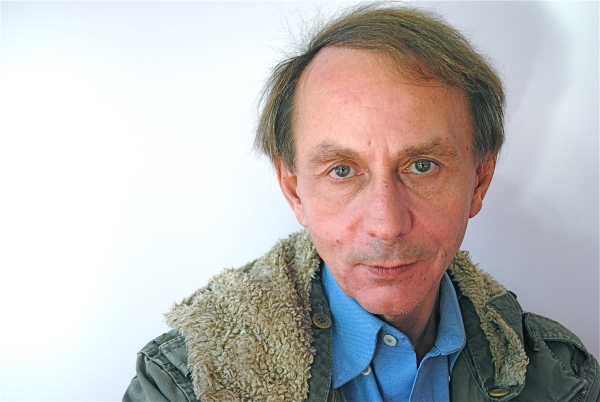
Photo by Sylvain Bourmeau

It's 2022, and France is living in fear. The country is roiled by mysterious troubles. Regular episodes of urban violence are deliberately obscured by the media. Everything is covered up, the public is in the dark ... and in a few months the leader of a newly created Muslim party will be elected president. On the evening of June 5, in a second general election—the first having been anulled after widespread voter fraud—Mohammed Ben Abbes handily beats Marine Le Pen with support from both socialists and the right.

The next day, women abandon Western dress. Most begin wearing long cotton smocks over their trousers; encouraged by government subsidies, they leave the workplace in droves. Male unemployment drops overnight. In formerly rough neighborhoods, crime all but disappears. Universities become Islamic. Non-Muslim teachers are forced into early retirement unless they convert and submit to the new regime.

This is the world imagined by Michel Houellebecq in his sixth novel, Soumission (Submission), which will appear next week. Should it be read as a bad op-ed, as pulp fiction for an election year, or as the attempt of a great writer to air a social critique through farce? In an exclusive interview—the first he's given about this novel—Houellebecq explains what led him to write a book that has already created a scandal in France, even before its publication.

Why did you do it?

For several reasons, I'd say. First of all, I think, it's my job, though I don't care for that word. I noticed some big changes when I moved back to France, though these changes are not specifically French, but rather Western. As an exile you don't take much of an interest in anything, really, neither your society of origin nor the place you live—and besides, Ireland is a slightly odd case. I think the second reason is that my atheism hasn't quite survived all the deaths I've had to deal with. In fact, it came to seem unsustainable to me.

The death of your dog, of your parents?

Yes, it was a lot in a short period of time. Part of it may be that, contrary to what I thought, I never was quite an atheist. I was an agnostic. Usually that word serves as a screen for atheism but not, I think, in my case. When, in the light of what I know, I reexamine the question whether there is a creator, a cosmic order, that kind of thing, I realize that I don't actually have an answer.

Whereas before you felt …

I thought I was an atheist, yes. Now I really don't know. So those are the two reasons I wrote the book, the second reason probably outweighing the first.

How would you characterize this book?

The phrase "political fiction" isn't bad. I don't think I've read many similar examples, but at any rate I've read some, more in English literature than in French.

What books are you thinking of?

In a way, certain books by Conrad. Or by John Buchan. And then more recent books, not as good, which are more like thrillers. A thriller can unfold in a political setting, it doesn't always have to be tied to the business world. But there's a third reason I've written this book—because I quite liked the way it began. I wrote the first part, up to page twenty-six, practically in one sitting. And I found it very convincing, because I can easily imagine a student finding a friend in Huysmans and dedicating his life to him. This didn't happen to me: I read Huysmans much later, I think when I was almost thirty-five, but I definitely would have liked reading him. I think he would have been a real friend to me. And so, after I wrote those pages, I did nothing for a while. That was in January 2013, and I must have gone back to the text that summer. But my project was very different at the beginning. It wasn't meant to be called Soumission, the first title was La Conversion. And in my original project the narrator converted, too, but to Catholicism. Which is to say, he followed in Huysmans's footsteps a century later, leaving naturalism to become Catholic. And I wasn't able to do it.

Why not?

It didn't work. In my opinion, the key scene of the book is the one where the narrator takes one last look at the Black Madonna of Rocamadour, he feels a spiritual power, like waves, and all at once she fades into the past and he goes back to the parking lot, alone and basically in despair.

Is this a satirical novel?

No. Maybe a small part of the book satirises political journalists—politicians a little bit too, to be honest. But the main characters are not satirical.

Where did you get the idea for a presidential election, in 2022, that came down to Marine Le Pen and the leader of a Muslim party?

Well, Marine Le Pen strikes me as a realistic candidate for 2022—even for 2017 … The Muslim party is more … That's the heart of the matter, really. I tried to put myself in the place of a Muslim, and I realized that, in reality, they are in a totally schizophrenic situation. Because overall Muslims aren't interested in economic issues, their big issues are what we nowadays call societal issues. On these issues, obviously, they are very far from the left and even further from the Green party. Just think of gay marriage and you'll see what I mean, but the same is true across the board. And one doesn't really see why they'd vote for the right, much less for the extreme right, which utterly rejects them. So if a Muslim wants to vote, what's he supposed to do? The truth is, he's in an impossible situation. He has no representation whatsoever. It would be wrong to say that this religion has no political consequences—it does. So does Catholicism, for that matter, even if the Catholics have been more or less marginalized. For those reasons, it seems to me, a Muslim party makes a lot of sense. 

But to imagine that such a party might find itself poised to win a presidential election seven years from now …

I agree, it's not very realistic. For two reasons, actually. First—and this is the most difficult thing to imagine—the Muslims would have to succeed in getting along with each other. That would take someone extremely intelligent and with an extraordinary political talent, qualities that I give to my character Ben Abbes. But an extreme talent is, by definition, an unusual occurrence. But supposing he existed, the party could take off, but it would take longer than seven years. If we look at the way the Muslim Brotherhood has done it, we see regional networks, charities, cultural centers, prayer centers, vacation centers, healthcare, something not unlike what the Communist Party did. If you ask me, in a country where poverty will continue to spread, this party could attract a lot more than just "average" Muslims, if I can put it that way, because really there is no longer such a thing as an "average" Muslim since we now have people converting who are not at all of North African origin … But such a process would take several decades. The sensationalism of the media plays a negative role, really. For example, they loved the story of the guy living in a little village in Normandy, as French as he could be, not even from a broken home, who converted and went off to wage jihad in Syria. But we can reasonably assume that for every guy like that there are several dozen who convert and don't go off to wage jihad in Syria, who don't do anything of the kind. After all one doesn't wage jihad for the fun of it, that sort of thing only interests people who are strongly motivated by doing violence, which is to say, necessarily a minority.

You could also say that what really interests those people is going to Syria, rather than converting.

I disagree. I think there is a real need for God and that the return of religion is not a slogan, but a reality, and that it is very much on the rise.

That hypothesis is central to the book, but we know that it has been discredited for many years by numerous researchers, who have shown that we are actually witnessing a progressive secularization of Islam, and that violence and radicalism should be understood as the death throes of Islamism. That is the argument made by Olivier Roy and many other people who have worked on this question for more than twenty years.

This is not what I have observed, although in North and South America, Islam has benefited less than the evangelicals. This is not a French phenomenon, it's almost global. I don't know about Asia, but the case of Africa is interesting because there you have the two great religious powers on the rise: evangelical Christianity and Islam. I remain in many ways a Comtean, and I don't believe that a society can survive without religion.

But why did you decide to tell these things in such a dramatically exaggerated way when even you acknowledge that the idea of a Muslim president in 2022 is unrealistic?

That must be my mass market side, my "thriller" side.

You wouldn't call it your Eric Zemmour side?

I don't know, I haven't read his book. What does he say, exactly?

He and a number of other writers overlap, despite their differences, in describing a contemporary France which strikes me as essentially fantastical, where the menace of Islam looms over French society and is one of its principal features. In the plot of your novel, it seems to me, you accept this as a premise and you promote the same description of contemporary France that we find in the work of those intellectuals today.

I don't know, I only know the title of Zemmour's book [Le Suicide français], and this is not at all the way I see things. I don't think we are witnessing a French suicide. I think we are seeing practically the opposite: Europe is committing suicide and, in the middle of Europe, France is struggling desperately to survive. It is almost the only country that is fighting to survive, the only country whose demographics allow it to survive. Suicide is a matter of demographics, it's the best and most effective way to commit suicide. That's why France is not committing suicide at all. What's more, for people to convert is a sign of hope, not a threat. It means they aspire to a new kind of society. That said, I don't think people convert for social reasons, their reasons for converting are deeper—even if my book contradicts me slightly, Huysmans being the classic case of a man who converts for reasons that are purely aesthetic. Really, the questions that worry Pascal leave Huysmans cold. He never mentions them. I almost have trouble imagining such an aesthete. For him beauty was the proof. The beauty of rhyme, of paintings, of music proved the existence of God.

This brings us back to the question of suicide, since Baudelaire said of Huysmans that the only choice he could make was between suicide or conversion …

No, it was Barbey d'Aurevilly who made that remark, which is fair enough, especially after reading A Rebours. I reread it closely and, in the end, it really is Christian, it's astonishing.

To go back to the question of your unrealistic exaggerations, in your book you describe, in a very blurry and vague way, various world events, and yet the reader never knows quite what these are. This takes us into the realm of fantasy, doesn't it, into the politics of fear.

Yes, perhaps. Yes, the book has a scary side. I use scare tactics.

Like imagining the prospect of Islam taking over the country?

Actually it's not clear what we are meant to be afraid of, nativists or Muslims. I leave that unresolved.

Have you asked yourself what the effect might be of a novel based on such a hypothesis?

None. No effect whatsoever.

You don't think it will help reinforce the image of France that I just described, in which Islam hangs overhead like the sword of Damocles, like the most frightening thing of all?

In any case, that's pretty much all the media talks about, they couldn't talk about it more. It would be impossible to talk about it more than they already do, so my book won't have any effect.

Doesn't it make you want to write about something else so as not to join the pack?

No, part of my work is to talk about what everyone is talking about, objectively. I belong to my own time.

You remark in your novel that French intellectuals tend to avoid feeling any responsibility, but have you asked yourself about your own responsibilities as a writer?

But I am not an intellectual. I don't take sides, I defend no regime. I deny all responsibility, I claim utter irresponsibility—except when I discuss literature in my novels, then I am engaged as a literary critic. But essays are what change the world.

Not novels?

Of course not. Though I suspect this book by Zemmour is really too long. I think Marx's Capital is too long. It's actually the Communist Manifesto that got read and changed the world. Rousseau changed the world, he sometimes knew how to go straight to the point. It's simple, if you want to change the world you have to say, Here's how the world is and here's what must be done. You can't lose yourself in novelistic considerations. That's ineffectual.

But you don't need me to tell you how a novel can be used as an epistemological tool. That was the subject of The Map and the Territory. In this book, I feel that you have adopted categories of description, oppositions, that are worse than dubious—the sort of categories relied on by the editors of Causeur, or by Alain Finkelkraut, Eric Zemmour, even Renaud Camus. For example, the "opposition" between anti-racism and secularism.

One cannot deny there is a contradiction there.

I don't see it. On the contrary, the same people are often militant anti-racists and fervent defenders of secularism, with both ways of thinking rooted in the Enlightenment.

Look, the Enlightenment is dead, may it rest in peace. A striking example? The left wing candidate on Olivier Besancenot's ticket who wore the veil, there's a contradiction for you. But only the Muslims are in an actually schizophrenic situation: on the level of what we customarily call values, Muslims have more in common with the extreme right than with the left. There is a more fundamental opposition between a Muslim and an atheist than between a Muslim and a Catholic. That seems obvious to me.

But I don't understand the connection with racism …

That's because there is none. Objectively speaking, there is none. When I was tried for racism and acquitted, a decade ago, the prosecutor remarked, correctly, that the Muslim religion was not a racial trait. This has become even more obvious today. So we have extended the domain of "racism" by inventing the crime of islamophobia.

The word may be badly chosen, but there do exist forms of stigma, toward groups or categories of person, which are forms of racism …

No, islamophobia is not a kind of racism. If anything has become obvious, it's that.

Islamophobia serves as a screen for a kind of racism that can no longer be expressed because it's against the law.

I think that's just false. I don't agree.

You rely on another dubious dichotomy, the opposition between antisemitism and racism … when actually we can point to many moments in history when those two things have gone hand in hand.

I think antisemitism has nothing to do with racism. I've spent time trying to understand antisemitism, as it happens. One's first impulse is to connect it with racism. But what kind of racism is it when a person can't say whether somebody is Jewish or not Jewish, because the difference can't be seen? Racism is more elementary than that, it's a different skin color …

No, because cultural racism has been with us for a long time.

But now you're asking words to mean something they don't. Racism is simply when you don't like somebody because he belongs to another race, because he hasn't got the same color skin that you do, or the same features, et cetera. You can't stretch the word to give it some higher meaning.

But since, from a biological point of view, "races" don't exist, racism is necessarily cultural.

But racism exists, apparently, all around us. Obviously it has existed from the moment when races first began mixing … Be honest, Sylvain! You know very well that a racist is someone who doesn't like somebody else because he has black skin or because he has an Arab face. That's what racism is.

Or because his values or his culture are …

No, that's a different problem, I'm sorry.

Because he is polygamous, for example.

Ah, well, one can be shocked by polygamy without being the least bit racist. That must be the case for lots of people who are not the least bit racist. But let's go back to antisemitism, because we've gotten off topic. Seeing as how no one has ever been able to tell whether somebody is Jewish just by his appearance, or even by his way of life, since by the time antisemitism really developed, very few Jews had a Jewish way of life, what could antisemitism really mean? It's not a kind of racism. All you have to do is read the texts to realize that antisemitism is simply a conspiracy theory: there are hidden people who are responsible for all the unhappiness in the world, who are plotting against us, there's an invader in our midst. If the world is going badly, it's because of the Jews, because of Jewish banks … It's a conspiracy theory.

But in Soumission, isn't there a conspiracy theory—the idea that a "great replacement" (to use the words of Renaud Camus) is underway, that Muslims are seizing power … ?

I don't know much about this "grand replacement" theory, but I gather it has to do with race. Whereas in my book there is no mention of immigration. That's not the subject.

It's not necessarily racial, it can be religious. In this case, your book describes the replacement of the Catholic religion by Islam.

No. My book describes the destruction of the philosophy handed down by the Enlightenment, which no longer makes sense to anyone, or to very few people. Catholicism, by contrast, is doing rather well. I would maintain that an alliance between Catholics and Muslims is possible. We've seen it happen before, it could happen again.

You who have become an agnostic, you can look on cheerfully and watch the destruction of Enlightenment philosophy?

Yes. It has to happen sometime and it might as well be now. In this sense too I am a Comtean. We are in what he calls the metaphysical stage, which began in the Middle Ages and whose whole point was to destroy the phase that preceded it. In itself, it can produce nothing, just emptiness and unhappiness. So yes, I am hostile to Enlightenment philosophy, I need to make that perfectly clear. 

Why did you choose to set your novel in the world of academia? Because it embodies the Enlightenment?

Is it all right to say I don't know? Because really, I don't think I do. The truth is that I wanted there to be a long subplot dealing with Huysmans, that's where I got the idea of making my character an academic.

Did you know from the beginning that you would write the novel in the first person?

Yes, because it was a play on Huysmans. It was like that from the beginning.

Once again, you've written a character who is partly a self-portrait, not entirely, but … There is the death of his parents, for example.

Yes, I have used things, even if the details are really quite different. My main characters are never self-portraits, but they are always projections. For example, what if I'd read Huysmans when I was young, if I'd studied literature and become a professor? I imagine lives that I haven't led.

While allowing actual events to insert themselves in your fictional lives.

I use moments that have struck me in real life, yes. But more and more I tend to transpose them. In this book, all that's left of reality is the theoretical element - "the death of the father"—but actually everything about it is different. My father was very different from this guy, his death didn't happen that way at all. Life just gives me the basic ideas.

In writing this book did you feel you were a Cassandra, a prophet of doom? 

You can't really describe this book as a pessimistic prediction. At the end of the day, things don't go all that badly, really.

Not so badly for the men, but for the women …

Yes, that's a whole other problem. But it seems to me that the project of rebuilding the Roman empire isn't so stupid, if you re-orient Europe toward the south the thing starts to make a kind of sense, even if it doesn't make sense right now. Politically, one might even welcome this development—it's not really a catastrophe.

And yet the book is extraordinarily sad.

Yes, it has a strong underlying sadness. In my opinion, the ambiguity culminates in the last sentence: "I would have nothing to mourn." Really, one could come away feeling exactly the opposite. The character has two things to mourn: Myriam and the Black Madonna. But he happens not to mourn them. What makes the book sad is a sort of ambience of resignation.

How would you place this novel in relation to your other books?

You might say I did several things that I'd wanted to do for a long time, things I'd never done before. Like having a very important character whom one never sees, namely Ben Abbes. I also think it's the saddest ending to a love plot that I've ever written, because it's the most banal: out of sight, out of mind. They had feelings. In general, there is a much stronger feeling of entropy than in my other books. It has a somber, crepuscular side, which accounts for the sadness of its tone. For example, if Catholicism doesn't work, that's because it's already run its course, it seems to belong to the past, it has defeated itself. Islam is an image of the future. Why has the idea of the Nation stalled out? Because it's been abused too long.

There is no trace of romanticism here, much less lyricism. We've moved on to decadence.

That's true. The fact that I started with Huysmans must have something to do with this. Huysmans couldn't go back to romanticism, but for him it was still possible to convert to Catholicism. The clearest point of connection with my other books is the idea that religion, of some kind, is necessary. That idea is there in many of my books. In this one too, only now it's an existing religion.

Whereas earlier one might have invented a religion, along Comtean lines.

Auguste Comte tried in vain to create a religion and, indeed, I have sometimes created religions in my books. The difference is that this one really exists.

What is the place of humor in this book?

There are comic characters here and there. I would guess that it's about the same as usual, really, with the same number of ridiculous characters.

We haven't spoken much about women. Once again you will attract criticism on that front …

Certainly a feminist is not likely to love this book. But I can't do anything about that.

And yet you were shocked when people described Whatever as misogynistic. This book won't help your case.

I still don't think I'm a misogynist, really. I would say that this isn't the crucial thing, in any case. The thing that may rub people the wrong way is that I show how feminism is demographically doomed. So the underlying idea, which may really upset people in the end, is that ideology doesn't matter much compared to demographics.

This book is not meant as a provocation?

I accelerate history, but no, I can't say that the book is a provocation—if that means saying things I consider fundamentally untrue just to get on people's nerves. I condense an evolution that is, in my opinion, realistic.

While you were writing or rereading the book, did you anticipate any reactions to its publication?

I still can't predict these things, not really.

Some might be surprised that you chose to go in this direction when your last book was greeted as such a triumph that it silenced your critics.

The true answer is that, frankly, I didn't choose. The book started with a conversion to Catholicism that should have taken place but didn't.

Isn't there something despairing about this gesture, which you didn't really choose?

The despair comes from saying goodbye to a civilization, however ancient. But in the end the Koran turns out to be much better than I thought, now that I've reread it—or rather, read it. The most obvious conclusion is that the jihadists are bad Muslims. Obviously, as with all religious texts, there is room for interpretation, but an honest reading will conclude that a holy war of aggression is not generally sanctioned, prayer alone is valid. So you might say I've changed my opinion. That's why I don't feel that I'm writing out of fear. I feel, rather, that we can make arrangements. The feminists will not be able to, if we're being completely honest. But I and lots of other people will.

You could replace the word "feminists" with "women," no?

No, you can't replace the word feminists with women. Really you can't. I make it clear that women can be converts, too.

Sylvain Bourmeau is a producer at France Culture and an associate professor at the Ecole des Hautes Etudes en Sciences Sociales in Paris.

Translated from French by Lorin Stein.


Evernote helps you remember everything and get organized effortlessly. Download Evernote.

31 Things You Can Do Instead Of Spending Money : Body, Mind, Soul & Spirit – UPDATED DAILY! | BodyMindSoulSpirit.com


by Kyle Robbins

Believe it or not, there are still fun, interesting, and inspiring things to do in every corner of the country that cost absolutely nothing, which is good since prices are rising to historic rates. The average cost for a movie ticket is an all-time high at $8.38 nationally, making a simple night at the movies too costly for many families. Finding activities that you can do without spending money has become a top priority.

No matter where you live, there are plenty of things to do without spending money. From amazing places with breathtaking views, to sports and activities that can keep you entertained, to the joy of learning, building, and exploring new things, here's a list of 31 meaningful things you can do instead of spending money.

  1. Find the most beautiful place within 100 miles and go there. Explore it. Or just find a bench and take in the view.
  2. Read a book. Start with a classic like Catch 22 or Great Gatsby.
  3. Visit a local museum. Art museums often have amazing grounds to explore.
  4. Go to a park. Play on the playground or dip your toes in the stream.
  5. Clean your house. There's never a bad time to check it off the list.
  6. Write. Anything. It doesn't have to be the next American novel, and no one else has to read it. But putting your thoughts on paper can change your life.
  7. Visit the library. They still exist. And they are better than you remember.
  8. Ride your bike. Just make sure to wear a helmet.
  9. Take a walk. And not with iTunes blaring. Get to know your area.
  10. Volunteer. There are hundreds of opportunities daily to make a difference. Today's the day.
  11. Exercise. You'll feel better and get healthy. Skip the gym and find somewhere outdoors.
  12. Spend time with a friend. In person. The only reason for a phone is to take a selfie to remember the good times.
  13. Call your grandparents. They miss you.
  14. Update your resume, even when you're not looking for a new job. You never know when an opportunity will present itself.
  15. Spend time in the garden. Your plants will thank you.
  16. Play tennis. Or basketball. Or soccer. Any sport really.
  17. Take a nap. A hammock, back yard, or beach are the ideal spots.
  18. Learn a new language. Practice with native speakers.
  19. Learn how to code. No matter what your profession, learning new computer skills can help you stand out.
  20. Clean out your email box. It's time to get organized.
  21. Learn to play guitar. Or go fishing. Find your next hobby.
  22. Make time for romance. Channel your inner high school-self and have some fun with your spouse.
  23. Build something. If you're handy, use old wood to create a table. If you're not, find a project on Pinterest that anyone can do.
  24. Experiment in the kitchen. Use all those ingredients that got shoved to the back of the pantry and experiment. You may discover your inner Bobby Flay.
  25. Groom and bathe your pets. Fido and socks will thank you. Your family will too.
  26. Find a heavily traffic spot and people watch. Reality TV has nothing on an hour of people watching.
  27. Have a bonfire. Invite your friends or enjoy the time with your family.
  28. Sit on your porch or deck. Your favorite spirits optional.
  29. Host a game night. Play cards and board games. Make it a pot luck to save money.
  30. Go to a high school sporting event. You may have to pay for football and basketball, but many sports don't cost a dime.
  31. Get a second job. The only thing better than saving money is making money. Find a part time job you enjoy with people you enjoy.

And many, many more. Just remember that the simple things in that matter. And often times, those simple things are free.

Posts related to 31 Things You Can Do Instead Of Spending Money

10 Amazing Things That Happen When You Learn to Enjoy Being Alone

by Tony Robinson Some people think of "being alone" as a bad thing. It either means you're anti-social, or unwanted, neither of which are a ...

Why Do Our Best Friends Become Strangers?

by Joe Martino Do you have that one person you were once so close to -and for so long -that you are now basically nothing ...

How To Get Past A Devastating Breakup

By Susan J. Elliott Ten Things To Do After A Breakup To Get On With Your Life: 1. Know that grieving someone and missing them ...

How To Let Go Of Things That Don't Serve You

by Michelle Bland  As I approach my 40th year in this life of mine, I find myself reflecting on past circumstances more than ever before. ...

16 Tips For Going Off Grid

"We must do away with the absolutely specious notion that everybody has to earn a living. It is a fact today that one in ten ...

Use Facebook to Comment on this Post

Tags: free fun, free stuff, free things to do, free things to do for fun, how to save money, saving money, self improvement, ways to avoid spending money

Category: Body & Mind


Evernote helps you remember everything and get organized effortlessly. Download Evernote.

Wednesday, December 31, 2014

30 Things Mentally Strong People Don't Do


30 Things Mentally Strong People Don't Do

2/19/14 11:48AM EST
Wall Street Insanity | by
Katherine Pilnick

Image via House Of Cards/ Facebook

Like Us On Facebook

If you're looking to beef up your brain muscles, take notes from people who are already mentally strong. Do what they do, and more importantly, don't do what they don't do. Here are 30 things that mentally strong people don't do.

1. Dwell On The Past

Overthinking the past does nothing to improve the present or the future. Mentally strong people don't waste time on what could have been.

2. Repeat The Past

While you shouldn't actively think about it all the time, your history makes you who you are, and you should be getting smarter and wiser all the time. Learn from your mistakes and avoid repeating the past.

3. Ignore Advice

Strong, secure people know they're not perfect, and they embrace that. To that end, they're always open to taking advice and hearing constructive criticism. It's one way to drive them to improve.

4. Avoid Change

Change is inevitable, and it's useless to try to stop it. Accept that change is going to happen, even if you don't like the specific changes. They could lead to a better future.

5. Keep A Closed Mind

Strong individuals are always open to new ideas and experiences. They're always looking to expand their horizons, and they understand that everyone around them has something to teach.

6. Stay In Their Comfort Zones

Along the same lines, confident people are willing to reach beyond what they know. They'll try new foods and visit new places in order to branch out and create experiences.

7. Get Envious

A little jealousy can be a healthy driving factor. It can provide motivation to improve. But excessive jealous and envy become negative, creating anger instead of motivation. Be happy for others and for yourself.

8. Avoid Decisions

To be strong, you must take control of your life and your own decisions. Don't let others decide your life for you.

9. Let Others Control Them

Likewise, strong people stand up for themselves. You're the only one who has control over your life, and you shouldn't let anyone take that away from you.

10. Avoid Risks

Calculated risks are a part of life, and they're just one way you should be leaving your comfort zone. Push yourself to succeed in new areas and accomplish new goals. But don't gamble blindly.

11. Think About Failure

Whether its a past failure or the potential for a future one, push it out of your mind. You can't change mistakes of the past. And as for the future, you're well-prepared. If you do fail, you'll know you gave it your best shot.

12. Be Pessimistic

Mentally strong people feel good about their lives and their futures. They never get down about temporary or unimportant things.

13. Throw Pity Parties

If you don't like something in your life, work to change it or overcome it. There's no sense in feeling sorry for yourself.

14. Dwell On Their Weaknesses

Everyone has weaknesses and flaws. They're normal and often good, because they set you apart. If you feel you have room to improve, put in the effort to improve yourself rather than feeling defeated.

15. Try To Please Everyone

At the end of the day, you need to feel good about yourself and your actions. You'll never be able to please everyone in your life. While it's important to make an effort for those in your life, remember that you answer to yourself.

16. Find Blame And Fault

Life isn't perfect, but pointing fingers doesn't solve problems. Rather than blaming others (or yourself) for any predicament you're in, work hard to change your predicament and improve your life.

17. Avoid Taking Responsibility

Likewise, you must take responsibility for your actions and for the state of your life. If you're not where you want to be, make a realistic plan to get there and follow through with it.

18. Be Uncertain

Mentally strong people know exactly what they want in life. They set goals and work hard to achieve them.

19. Be Unclear

They also know how to communicate their goals to others. They are clear about their intentions and actions.

20. Worry About The Future

If you're certain about what you want and take responsibility for your goals and actions, things will probably work out for you. And even if they don't, you gave it your all. Worrying about the future won't better prepare you for what's ahead.

21. Feel Entitled

Expect that you need to work for everything you want. Some things might be handed to you and make life easier. Feel grateful for those things, not entitled.

22. Let Fear Control Them

Don't base important decisions on irrational fears. Something could always go wrong, but it rarely does. Work on overcoming your fears and not letting them hold you back.

23. Try To Change Things They Can't

You can work hard for a lot of things in life, but some things are still out of your power. Accept the things you can't change, and focus on the ones you can.

24. Make Rash Decisions

Keep your goals in mind, and don't make rash or impulsive decisions that would mess up your plan. Think things through and decide what you really want to do.

25. Try To Be Secluded In Life

Everyone needs others in their lives. Strong people accept that they need a network of friends, family and support. They don't try to do everything alone.

26. Avoid Being Alone

There are some times in day-to-day life when you'll find yourself apart from your support system, and that's OK, too. Strong people are comfortable being alone with their thoughts.

27. Expect Immediate Changes

Working toward your goals doesn't mean you'll achieve them overnight. Show patience and diligence in everything, and know that change is coming.

28. Let Their Emotions Control Them

Of course emotions are natural and necessary, but decisions and actions shouldn't happen in the heat of the moment. Take a step back from any situation and try to view it logically.

29. Give Less Than Their All

Try your best whenever you start a new endeavor. You'll never have to wonder what would have happened or regret not giving your all.

30.Give Up

Persevere in everything you do, and try as many times as it takes to succeed.

Like Us On Facebook

Evernote helps you remember everything and get organized effortlessly. Download Evernote.

Monday, December 29, 2014

15 Damaging Myths About Life We Should All Stop Believing | Elyse Gorman


15 Damaging Myths About Life We Should All Stop Believing

1. There is a single definition of success.

And it involves an established career, large house, acceptable body shape, marriage and annual holidays.

Everyone has their own path to walk in this life, and what brings true meaning and deep fulfillment differs for all of us.

Let go of your need to fit to the status quo. Live, work, date, play, create, travel, eat, drink, move, laugh and sing in ways that feel right with your soul. That is true success.

2. Life is meant to be hard work.

Life is meant to be easy, beautiful and overflowing with moments of joy and bliss.

The more you listen to your soul and build a life that's true to you, the more your actions will feel completely natural and effortless.

If life is a constant struggle, you're running on empty and you dread Mondays, it's time to take an honest look at your life -- in a loving way.

3. Life happens to us.

Where you are now is a result of the choices you made in the past. Where you will be in the future is a result of the choices you are making right now.

You are an active participant in the creation of your life. So embrace your power as a creator, and start choosing thoughts, words and actions that make a positive impact and will come back to you in a million magnificent, beautiful, jaw-dropping ways.

4. There is such a thing as normal, and we should measure ourselves against it.

There is no such thing as a normal human, but there is such a thing as a "normal" you -- where you're completely yourself, you love yourself deeply and you think and act in ways that feel aligned with your soul.

Let your internal compass be your only point of reference.

5. There is an "us" and a "them."

We draw a line around our social and family circles, keeping out everyone who doesn't fit neatly within our definition of normal, interesting or worthwhile.

While everyone has vastly different aptitudes, passions and quirks, everyone also has the same light within them. The light within you is the same light within me, within the stranger on the bus, and within anyone you consider your enemy.

6. We have to compete for limited resources.

Life is meant to be abundant and limitless. We create scarcity by believing in it, instead of focusing our efforts on creating, giving and contributing our gift to help humankind reach its highest potential.

Relax and feel it deep within your heart that you will always be provided for.

7. Happiness comes from external things.

We pin our happiness on external things like our appearance, bank balance, job title, travel plans, possessions and the opinions of others -- and then suffer as a result.

True, sustainable happiness comes from within -- by cultivating a mindset based on gratitude, mindfulness and acceptance.

8. Holding grudges is a natural part of life.

When we feel that someone has "wronged" us, we cling to the memory and carry it around with us for weeks or sometimes years. What we fail to realize is that we are holding ourselves hostage, not just the perceived wrong-doer.

The Buddha once said, "Holding on to anger is like grasping a hot coal with the intent of throwing it at someone else; you are the one who gets burned."

Make forgiveness your new motto and see how much freer and lighter your soul feels.

9. There is something wrong with us.

We are plagued by feelings of inadequateness and worthlessness, postponing self-acceptance and self-love until a day in the future when we're thinner, wealthier, more confident and more popular.

You are perfect and complete exactly as you are. Even when you are striving to improve and grow, you are complete. As the Buddhist saying goes, "We are all perfect as we are, and we could all use a little work."

10. It matters what other people think of us.

We give away so much of our energy, power and inner peace by worrying about what others think of us.

The truth is we can't ever know for certain what other people are thinking about us. So when your ego starts to fill you with doubt and fear, remember it's a fictional story.

11. We see things how they really are.

How we experience the world is heavily influenced by our beliefs and past experiences.

Our subconscious mind chooses pieces of information to serve to our conscious mind based on what we've programmed it to look for. Identify your dominant beliefs and replace the ones that aren't serving you.

12. Meditation is something people do on a cushion at sunrise.

You can meditate and be mindful all throughout the day as you go about your life.

Pause and feel the weight of your body in your seat, the feeling of the fabric against your skin, and the slight sensation of the air on your face.

Take a few deep breaths and let your whole being relax. Scan your body up and down for sensations, simply observing, without making any judgments.

13. When we give something, we lose something.

Giving and receiving are one in truth. When you give to someone with no strings attached -- whether it be a physical gift, a compliment or your time -- you are nourished as well as the receiver.

Not only do you experience sensations of satisfaction and joy, but your karma will bring more blessings and gifts back into your life.

14. We have to logically figure everything out.

We've been taught to trust our minds but not our intuition or inner voice of guidance.

When you're grappling with a problem or lacking clarity, learn to lean into your soul and trust the wisdom it provides to you -- often in the form of a gut feeling, serendipitous sign or a spontaneous "aha!" moment.

15. We need to be more realistic.

Many people think that daily happiness and joy is an unrealistic goal, and we should be more realistic.

Happiness is THE ultimate goal of our lives, and it is both worthwhile and attainable.

Understand your purpose is to blossom into the highest, happiest version of you and let go of any guilt you feel for making your happiness a priority.

Elyse is the founder of NotesOnBliss.com, your guidebook to happiness and creating a beautiful life, and the creator of the Beautiful Life Bootcamp 6-week eCourse. For free tips and inspiration, sign up now.

Also on HuffPost:

Close

Evernote helps you remember everything and get organized effortlessly. Download Evernote.